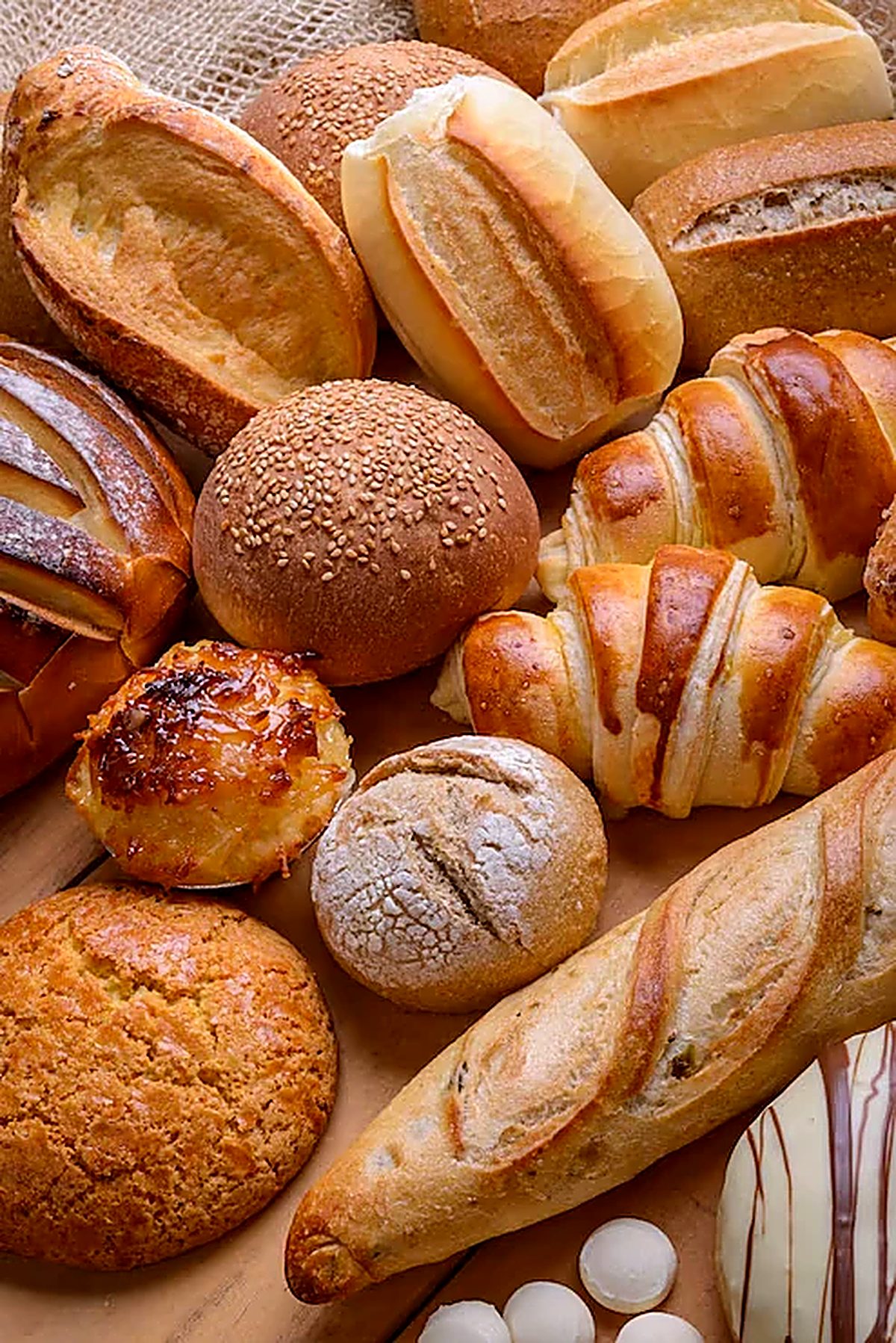
Bakery management software built inside a working bakery.
Built for bakeries, delis, caterers and food manufacturers — anyone who costs a recipe, holds stock and has to get product out of a door on time. Crusted Bakery Inc bakes for a living and builds this to keep track of it, so the features are here because a working kitchen needed them.
- Change one ingredient price, and every recipe using it reprices
- Bake lists built from what each store sold, not last week’s guess
- Short-dated stock surfaces while there is still time to move it
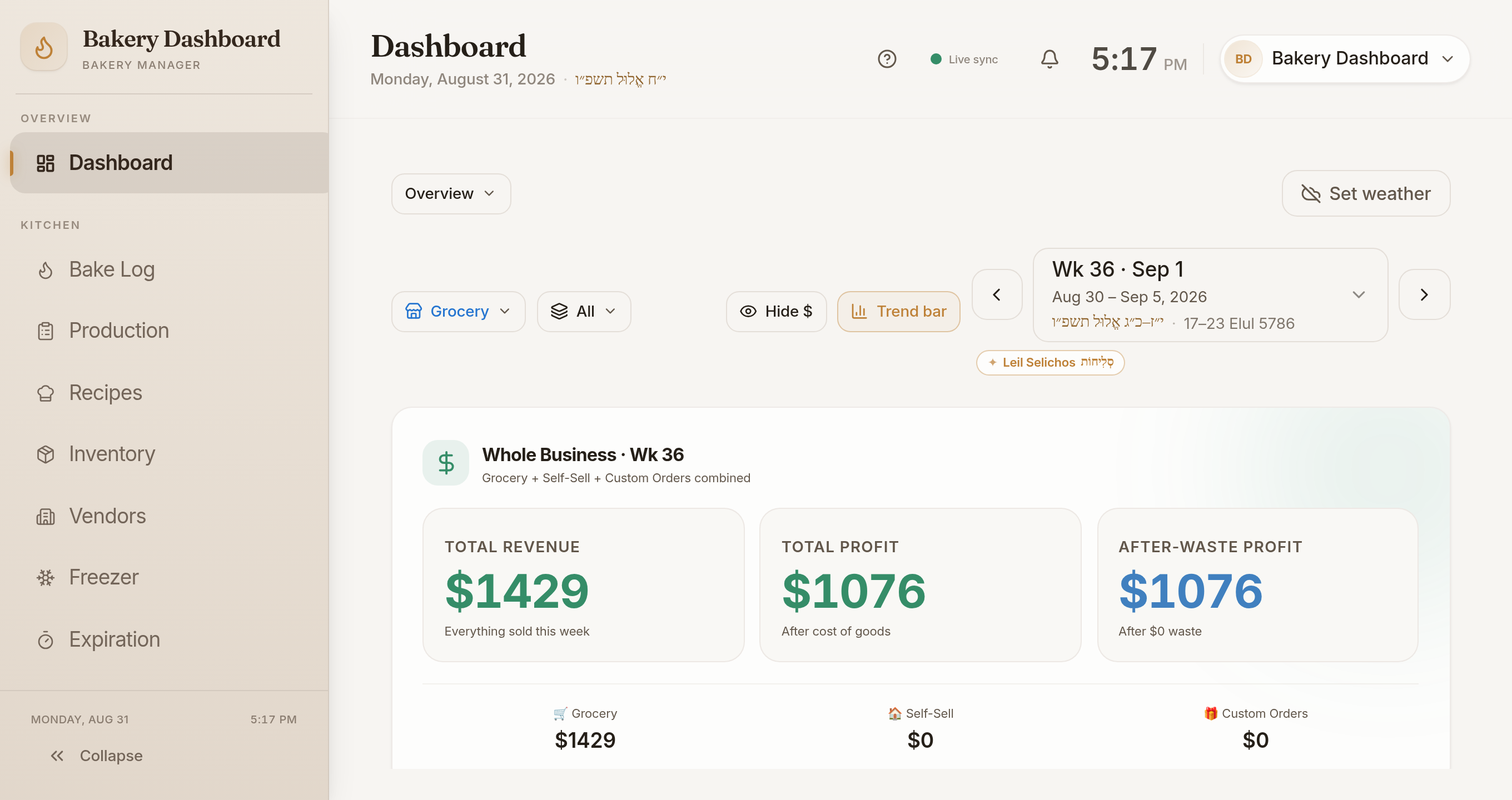
- Profit and loss for the week you are standing in
One plan, everything in it
Free to try first. After that, monthly or annual — annual costs less per month.
Bakery Dashboard is made by Crusted Bakery Inc, a retail bakery in New York, and it runs that bakery every day before it is sold to anyone else. Nothing ships that the kitchen has not already had to live with.
The name says bakery because that is where it was built. Nothing in it assumes bread: delis, caterers, commissary kitchens and small food manufacturers run on the same costed recipes, the same dated stock and the same question of how much to make tomorrow.
It installs on a phone, a tablet or a desktop, and keeps working when the signal drops in a walk-in or a loading bay — because that is where most of it gets used.
What it covers
One login, and the parts talk to each other: a price change reaches the P&L, a delivery reaches the next production list. Grouped below by roughly when you touch them.
Before the ovens go on
- Recipes and costing
- Recipes are built from priced ingredients, so each one knows what it costs to make. Put up the price of butter and every recipe containing butter reprices at the same moment. Labour and a share of overhead can be added on top, which is usually where a margin someone was proud of turns out to be thinner than they thought.
- Inventory
- Ingredient stock with pack sizes and unit costs, so a 25 kg sack and a 500 g bag of the same flour are one ingredient at one price per gram. Reorder suggestions come off the rate you are actually using it.
- Production planning
- A bake list per day, built from what each store sold rather than what was baked last week. Freezer stock is counted first, so the oven is only asked for what the freezer cannot cover.
- Autopilot targets
- Sets the per-store target for each item from your own trading history, including the weeks that are never normal — holidays, fast days, the run-up to a long weekend.
While the day runs
- Bake log
- What went in the oven, by item and by batch. Thirty seconds a bake.
- Sales
- Shelf sales and wholesale kept as separate channels on the same items, so neither one hides inside the other.
- Freezer and delivery runs
- What is frozen, what each store is owed, and what actually went onto the shelf when you got there. Returns are recorded as returns, not quietly counted as sales. Stores already at target drop off the run on their own.
- Pack My Box
- The packing list per store, and a bring list for the things that are not stock but still have to be in the van.
- Custom orders
- One-off and standing orders on a single date timeline, filed under the customer they belong to.
For anything you sell packaged
- Ingredient statements
- Built from the recipe you already costed, ordered by descending predominance by weight — the order food labelling law requires — with packaging and other non-edible lines left off automatically.
- Nutrition Facts panels
- Calculated from the same recipe, with daily values. Because the label and the cost sheet come from one formulation, they cannot drift apart.
- Labels and barcodes
- Shelf-life and ingredient labels print, and finished goods can carry barcodes.
Once the week is done
- Expiration and waste
- Shelf life tracked per batch, flagged while stock can still be moved. Every removal carries a reason, which is what turns waste from a feeling into a number you can work on.
- Analytics
- Sell-through by item and by store, year-on-year comparison, and a menu-engineering view of what sells well against what earns well. They are not the same list.
- Cost and P&L
- Profit and loss for the week you are standing in, not a quarter you have stopped thinking about. Connects to QuickBooks so your figures and your accountant’s can be put side by side.
What a week looks like
Setting up, once
Ingredients go in with their pack sizes and prices, recipes get built out of them, and each store gets a target per item. It is an afternoon of typing and it is the only long day.
Baking days
The bake list is waiting in the morning, already netted off against what is in the freezer. Log what came out of the oven as you go. Anything short-dated has already put its hand up.
Delivery mornings
Pack from the list, drive, and record what went on the shelf and what came back — on the phone, in the car park, whether or not there is signal. Stores that were already at target were dropped before you loaded the van.
Sunday, or whenever you do the books
Sales, waste and costs are already in, so the week’s profit is a page you read rather than an evening you lose. What sold, what got thrown, what each account was really worth after returns.
Pricing
One plan with everything in it. No per-seat charge, no setup fee.
Billed monthly · cancel anytime
- Change one ingredient price, and every recipe using it reprices
- Bake lists built from what each store sold, not last week’s guess
- Short-dated stock surfaces while there is still time to move it
- Profit and loss for the week you are standing in
- Unlimited stores and items
- Owner approval keeps your data private
- Cancel anytime, no contracts
Try it on next week’s baking
Setting up takes an afternoon. Everything is included in the trial. Requests are approved by hand, usually within a day, and you can cancel whenever you like.
Questions
- What is Bakery Dashboard?
- Bakery management software covering the parts of a food business that keep having to agree with each other: ingredient costs and recipes, stock in the store room and the freezer, the daily production list, deliveries and wholesale accounts, expiry, labelling, and the profit left at the end of it. It is built and used by Crusted Bakery Inc, a retail bakery in New York.
- Who is it for?
- Bakeries, delis, caterers, commissary kitchens and small food manufacturers — any food business past the point where a spreadsheet holds. Usually that means more than one place to deliver to, or enough products that nobody can hold the costs in their head any more.
- Is it only for bakeries?
- No. It was built in a bakery and the name reflects that, but nothing inside assumes bread. A deli costing a tray, a caterer costing a menu and a producer costing a batch are doing the same arithmetic on different units, and the app handles weight, volume and count with the conversions built in.
- Does it replace my spreadsheets?
- That is the intention. The failure mode with spreadsheets is not that they cannot do the arithmetic, it is that the costing workbook and the delivery sheet and the sales tab stop agreeing with each other and nobody notices for a month. Here a price change reaches the P&L on its own.
- How does the costing work?
- Each ingredient carries its pack size and price, so cost per gram is known. Recipes are built from those, including nested ones — a preferment costs into the dough that uses it. Labour and a share of overhead can be added to get a true cost, and you can set a margin you want to hold and be told which products have drifted under it.
- Can it handle wholesale and several stores?
- Yes. Targets are held per store and per item, deliveries are packed and recorded per store, and returns are logged as returns. Sell-through and margin are reported per account, which is how a busy customer that sends half of it back stops looking like your best one.
- Does it track expiry?
- Shelf life is held per item and tracked by batch, and stock is flagged while there is still time to move it rather than on the morning it has to go in the bin. Removals carry a reason, so waste ends up as something you can look at by cause.
- What does it cost?
- One flat plan with everything in it, monthly or annual, and annual works out cheaper per month. Current prices are in the pricing section above. There is a free trial first.
- How do I get an account?
- Request access and it gets approved by hand, usually within a day. That is deliberate rather than a bottleneck — every bakery’s data is isolated from every other one, and accounts are not created automatically.
- Can it produce nutrition and ingredient labels?
- Yes, from the same recipe you costed. The ingredient statement is ordered by descending predominance by weight, as labelling law requires, with packaging excluded; the Nutrition Facts panel carries daily values. Both print, which matters if you sell anything packaged.
- Does it work on a phone in the kitchen?
- It installs on iOS, Android and desktop straight from the browser and runs full screen. It keeps working when the connection drops, which matters more than it sounds: most of the recording happens in a walk-in or a loading bay.